
Publisher:

Lantana Publishing

Book Covers – My Mummies Built a Treehouse

My Mummies Built a Treehouse

A little boy and his mummies set off on a grand adventure together to build a treehouse and with imagination and hard work, they combine their skills as a family to make his dream come true. This is a gentle and warm story rooted in realism, with practicality at its core. The fact that the little boy has two mums is incidental and complementary to the story, rather than being the main focus.
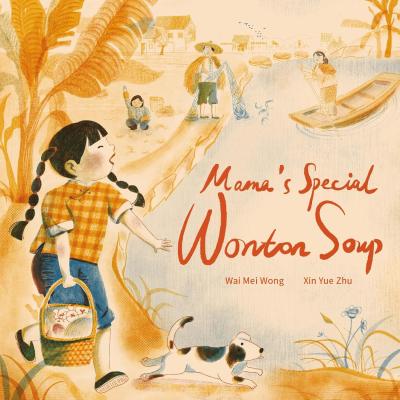

Book Cover – Mama's Special Wonton Soup

Mama's Special Wonton Soup

A young girl in Southern China receives an important task: her mother is making wonton soup, and she must buy some pork at the market! On the way there, the girl meets many friends and relations. As we meet each person, we learn something about an item of Chinese food, such as persimmon, rice grains, or the shrimp. We learn how to greet and thank each person in Chinese, and we see each person engaged in traditional pursuits, such as playing Chinese chess, or listening to Chinese opera.

Book Cover – A Card for My Mum

A Card for My Mum

The story follows a young girl searching for the perfect gift for her mother, only to realise that none of the available options depict a mother that looks like hers. A heartwarming and thought-provoking book about a young girl’s heartfelt effort to find a Mother’s Day card that reflects her diverse culture. This book explores themes of cultural representation, love and the simple yet profound act of appreciating mothers and their individuality.

Book Cover – The Brighter I Shine

The Brighter I Shine

The story begins with a young girl telling us that she is celebrating her birthday. The girl’s mother celebrates her birthday by sharing traditions and stories from Armenia and when her family and friends visit and are included in the celebrations. This universal experience allows children to immediately connect with the narrator.

Book Cover – Freedom Braids

Freedom Braids

Set against the backdrop of the Transatlantic Slave Trade, this story follows Nemy, a young girl bound to a life of hard labour in a Columbian plantation. One night, she discovers a group of women, led by Big Mother, braiding intricate patterns into each other’s hair – hidden within them are messages, maps, and symbols of hope.

Book Cover – The Language of Flowers

The Language of Flowers

Spending her days surrounded by flowers, Juhi is always aware of the greatest celebrations in her community and the blooms that mark these special moments. When her favourite community member falls ill, she turns to flowers not just as a means of communication but as a way to process and honour her emotions.

Book Cover – Step Into My Shoes

Step Into My Shoes

This picturebook brings the phrase ‘walk a mile in my shoes’ to life, following a young girl’s journey to develop emotional intelligence by stepping – quite literally – into the shoes of those around her.

Book Cover - Through the Forest

Through the Forest

Through the Forest begins with a young boy lost in a forest when he stumbles across a giant figure called Emptiness. The pair decide to stay together and during their wanderings come across various items in the woods that all symbolise a different memory for the boy, some happy and some sad. The story soon shows the importance of memories in helping create a sense of self and a clear path forward into the future.

Book Cover - I'll Believe You When...

I’ll Believe You When…: Unbelievable Idioms from Around the World

Cheerfully illustrated and thoughtfully diverse, this playful picturebook explores the concept of idioms through examples from around the world. Beginning in the UK, we begin with the phrase ‘when pigs fly’. The frequently absurd idioms are delightful. Hairy frogs, toothy chickens, dancing cows and whistling lobsters feature as we encounter examples from Spain, Nigeria, the Netherlands, Russian and more.

Book Cover - Escape

Escape

Escape is a beautifully haunting picturebook that illustrates the plight
of individuals forced to flee their homes and families because of socio-cultural upheaval. Ming and Wah Chen tell twelve stories that document the movement of people, spanning Syria to Greece, Austria to China, Scotland to France, Kiribati
to New Zealand, and many more. These stories allow for historical and geographical perspectives but reinforce positive outcomes. Ming and Wah cleverly use action verbs as chapter headings to signify the experiences of the individuals. In the opening page of the picturebook,