The Wild Way Home
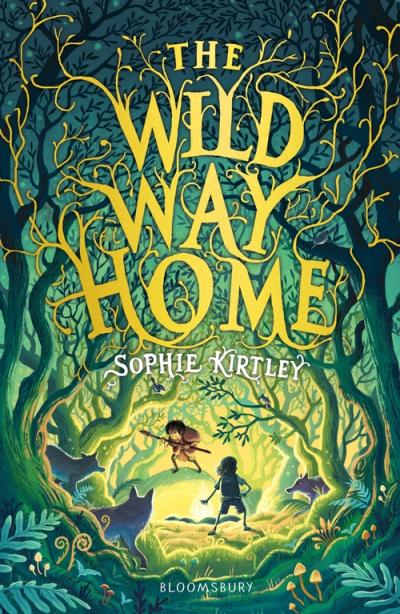
Charlie’s long-awaited baby brother is born gravely ill. Angry, inarticulate and confused at this unexpected turn of events, ten-year-old Charlie runs to the woods, a familiar and favourite site for escape and escapade in more manageable times. An impossible adventure begins to unfold.
A disembodied voice calling an approximation of Charlie’s name reveals itself to be Harby, a battered and bruised child warrior figure in skins with a spear, virtually pre-verbal, but utterly at home in the forest. Harby’s dogged determination to find his own lost baby sister soon has Charlie confronting the physical dangers of wolves and wild men, and the psychological challenges of desertion and bereavement.
Guided and emboldened by this spirit of the woods – and there is plenty of laughter and larking about amid the seriousness of the themes and the intensity of their journey of discovery – Charlie finds fresh resources and new perspectives emerging from some primitive place within at every turn.
Kirtley deftly conjures a prehistoric dreamscape where instinct must be trusted, verbal communication is unstable, and much depends on responding as best as one can to previously unimagined circumstances. It is a brilliantly universal, unflinching examination of self-realisation that is achingly poetic, a fine example of the best kind of time-slip novel. Like Charlie, we hear its parallels to our own inarticulacies as fleetingly as a voice half-caught on the wind and hold still all the harder to catch its truths. I suspect, like Stig of the Dump, it will become a classic.